
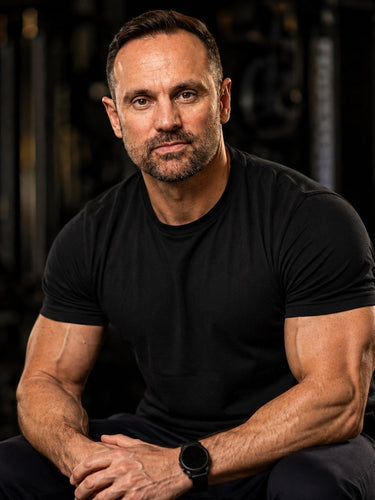
My journey with creatine started in 2007, when I was 30 years old.
At the time, I could never have imagined that almost two decades later I would be discussing creatine not simply in the context of sport, but in conversations around rehabilitation, critical care and the potential recovery of seriously injured individuals.
My interest began for a much simpler reason.
I wanted to find out what my body was naturally capable of.
I had always been an athlete. I boxed from around the age of eight, competed as a sprinter at a reasonably high national level and played rugby at a high level, where one of my biggest advantages was my speed.
But at 30, my sporting direction changed.
I joined a gym and met people involved in natural bodybuilding.
Natural bodybuilding fascinated me because competitors were drug tested. At the level at which I later competed, successful athletes could also be subjected to polygraph testing.
I remember thinking: If this really is natural, there is nothing stopping me from finding out what I can achieve.
One of the leading bodybuilders within the sport told me that I had started too late and would never win a British title.
Had I accepted that opinion, my story would probably have ended there.
Instead, it became motivation.

From Beginner to the Bodybuilding Champion
When I started bodybuilding, I weighed approximately 80 kg.
I knew very little about bodybuilding nutrition. What I did understand was that if I wanted to compete, I needed to build and retain muscle while removing a considerable amount of body fat.
That started an obsession with understanding food, supplementation and human performance.
Within approximately 16 weeks, I had reduced my bodyweight from around 80 kg to approximately 72 kg and stepped onto a bodybuilding stage for the first time.
I placed fifth in the novice category at the British Central Championships.
It wasn't a victory.
But it convinced me that I could do this.
Several years later, I returned to the same competition weighing approximately 72 kg again and won the lightweight category.
The number on the scales was virtually identical.
My body was completely different.
That became one of my earliest lessons about body composition.
Bodyweight tells you remarkably little about what is actually happening to the human body.
By 2014, the transformation had progressed considerably further.
I won my first British qualifier that year competing in the middleweight category at approximately 77 kg.
I subsequently won the British Central middleweight category at approximately 75 kg.
Then I competed at approximately 73 kg and became a British natural bodybuilding champion.
I later finished second at an INBF international competition.
I had achieved the thing I had been told was impossible because I started at 30.
But what interested me almost as much as the title was understanding how my body had changed.
The Strength Transformation
My physique wasn't the only thing that changed.
My strength changed dramatically.
Around 2009, I was bench pressing approximately:
100 kg for my normal working repetitions.
By 2014, I could perform a similar number of repetitions with approximately:
120 kg.
My deadlift progression was even more dramatic.
Around 2009, one of my best deadlift performances was:
180 kg × 6 repetitions.
By 2014, I could deadlift:
230 kg × 10 repetitions.
That is 50 kg more on the bar while simultaneously completing four additional repetitions.
I don't attribute those improvements to creatine alone.
That would be scientifically irresponsible.
They were produced through years of progressive resistance training, nutrition, recovery, discipline and supplementation.
But creatine became one of the nutritional strategies that remained remarkably consistent throughout that development.
And understanding why it appeared to work became increasingly important to me.

First I Had to Understand Protein
Like most people entering bodybuilding, I initially learned a relatively simple message:
Eat protein to build muscle.
But I wanted to understand what was actually happening.
Proteins are composed of amino acids. Of the amino acids used in human physiology, nine are considered nutritionally essential because the body cannot synthesise them in sufficient quantities and they therefore need to be obtained through the diet.
These are:
- Leucine — an essential branched-chain amino acid with an important signalling role in pathways regulating muscle protein synthesis, including mTORC1.
- Isoleucine — another branched-chain amino acid involved in protein and energy metabolism.
- Valine — the third branched-chain essential amino acid and an important substrate for protein synthesis and metabolism.
- Lysine — required for protein synthesis and numerous structural and metabolic processes.
- Methionine — involved in methylation pathways and, importantly for this story, one of the amino-acid precursors involved in endogenous creatine synthesis.
- Threonine — required for protein synthesis and numerous structural and physiological functions.
- Phenylalanine — an essential amino acid and precursor to tyrosine and subsequently several biologically important compounds.
- Tryptophan — required for protein synthesis and a precursor involved in serotonin and other metabolic pathways.
- Histidine — required for protein synthesis and involved in several physiological processes.
Leucine particularly interested me because of its signalling role in muscle protein synthesis.
But signalling alone isn't enough.
I came to think about it almost like a construction site.
Leucine can help signal that construction should begin, but the body still needs the complete range of required amino acids to actually construct new proteins.
That was one reason my interest moved towards essential amino acids rather than simply trying to consume increasingly large quantities of protein.
But amino acids answered only one part of the question.
They helped explain what the body required to synthesise proteins.
They didn't fully explain how I could maximise repeated high-intensity muscular performance.
That led me towards creatine.
Creatine: The Supplement I Couldn't Ignore
When I started researching creatine, some of the claims sounded extraordinary.
Here was a naturally occurring compound with evidence for improving performance during repeated bouts of short-duration, high-intensity exercise.
Coming from sprinting, boxing and rugby, that immediately got my attention.
Creatine isn't an anabolic steroid.
It isn't a stimulant.
And technically, it isn't an amino acid.
Creatine is a naturally occurring nitrogen-containing compound synthesised by the body using the amino acids arginine, glycine and methionine.
It is also obtained through the diet, particularly from meat and fish.
The reason it becomes so interesting for performance lies largely in one of the body's fundamental problems:
Energy has to be regenerated extremely quickly during intense muscular contraction.
ATP, Phosphocreatine and Rapid Energy
The immediate energy currency of our cells is adenosine triphosphate — ATP.
Every hard muscular contraction requires ATP.
But muscles store only limited quantities of immediately available ATP.
During short-duration, high-intensity exercise, one of the body's fastest mechanisms for regenerating ATP involves phosphocreatine.
The reaction can be simplified to:
Phosphocreatine + ADP → Creatine + ATP
The enzyme creatine kinase facilitates this rapid transfer.
This system effectively acts as a cellular energy buffer.
By increasing muscle creatine availability through supplementation, we can increase total intramuscular creatine stores, including phosphocreatine.
That helps explain why creatine supplementation has repeatedly been associated with improved high-intensity exercise capacity and greater training adaptations when combined with appropriate resistance training.
For someone whose sporting life had revolved around sprinting, boxing, rugby and eventually heavy resistance training, the implications were obvious.
But another area of research caught my attention.
Could we increase how effectively muscle accumulated creatine?
Why I Started Combining Creatine With Dextrose
When I started researching this in the 2000s, I repeatedly came across the suggestion that creatine should be consumed with carbohydrate.
Often the simple recommendation was orange juice.
There was actually science behind the idea.
Human research had demonstrated that carbohydrate co-ingestion could increase muscle creatine accumulation.
In one well-known study, subjects consumed creatine either alone or alongside a large quantity of simple carbohydrate. Muscle total-creatine accumulation was substantially greater when carbohydrate accompanied creatine.
The proposed mechanism involved insulin.
That fascinated me.
Orange juice wasn't particularly suitable for me personally, and I also wanted greater control over exactly what I was consuming.
So I began using dextrose alongside creatine.
This became part of my supplementation strategy.
It is important to clarify what I believe today.
Creatine does not require sugar to work.
Regular creatine monohydrate supplementation alone can increase intramuscular creatine stores.
But carbohydrate-induced insulin elevation has been shown under experimental conditions to augment muscle creatine accumulation.
There is therefore genuine physiology behind the strategy I was experimenting with.
Developing My First Creatine Product
During this period, I established my first sports-nutrition company.
That changed everything.
I was no longer simply buying supplements and reading labels.
I became involved in formulation, manufacturing and laboratory testing.
One of the products we created was extremely simple:
Creatine Mints
They combined creatine monohydrate with dextrose and peppermint oil in a chewable format.
We eventually achieved a listing for them in Tesco.
Looking back now, it is interesting that nearly two decades ago I was already trying to solve essentially the same problem that eventually led to VOW Creatine Chews:
How can we make creatine simple and practical to consume consistently?
At the time, creatine was nowhere near as mainstream as it is today.
It was well known in bodybuilding and strength sports, but outside those environments it was sometimes spoken about almost as though it were a questionable or banned substance.
The reality is very different.
Creatine is naturally present in the human body and in food.
Supplementation simply increases dietary creatine availability.
Why I Became Cautious About Liquid Creatine
Product development also taught me another important lesson.
Dry creatine monohydrate is extremely stable when appropriately manufactured and stored.
Once creatine is placed into an aqueous environment, the situation changes.
Creatine can progressively cyclise into creatinine, with degradation affected by factors including pH, temperature and storage conditions.
This became extremely important when I looked at developing creatine-containing drinks.
My own formulation experiences made me cautious about assuming that because a manufacturer adds a particular amount of creatine on production day, exactly the same quantity will necessarily remain at the end of a long ambient shelf life.
That does not mean it is impossible to formulate a stable creatine-containing liquid.
It means I believe manufacturers need robust stability testing demonstrating the quantity of creatine remaining throughout the product's stated shelf life.
For me, it strengthened the argument for accurately dosed solid formats.
The Experiment That Became Part of My 2014 British Title
By 2014 I had been experimenting with creatine for years.
During preparation for the British Championships, I generally consumed approximately:
15 g of creatine per day
I divided that across approximately four doses throughout the day.
And during particularly difficult periods, when my calories were very low and I subjectively felt especially fatigued, I would sometimes increase my intake to approximately:
20 g per day
Again, divided throughout the day.
This is an important point.
I am describing my personal protocol, not recommending that everybody consume 15–20 g of creatine indefinitely.
A conventional creatine-loading protocol used in research is often around 20 g/day, commonly divided into four 5 g doses, for approximately 5–7 days, followed by a lower maintenance intake.
What was unusual about my approach was that I maintained a relatively high intake over a much longer period.
Why I Didn't Remove Creatine Before Going On Stage
There was another important difference between my approach and that of some bodybuilders.
Creatine had developed a reputation for making people "hold water".
For a competitive bodybuilder trying to appear as lean and defined as possible, water retention sounded undesirable.
My experience was different.
As my body fat became extremely low, my muscles remained visually round and full.
When I stood on stage at approximately 73 kg and won the British title, the fullness of my muscles was obvious to me.
I believed creatine was contributing to it.
Scientifically, I have to qualify that observation.
Muscle appearance is influenced by numerous variables including glycogen, carbohydrate availability, sodium, hydration, training status and intracellular and extracellular fluid distribution.
We cannot retrospectively isolate creatine as the sole cause.
But the observation has a plausible physiological basis.
Skeletal muscle contains the majority of the body's creatine stores, and creatine supplementation can increase muscle water content.
That is very different from simply saying:
"Creatine makes you watery."
For me, the experience was almost the opposite.
I became progressively leaner while my muscles remained comparatively full.
But Appearance Wasn't the Most Important Effect
What interested me more was my ability to continue training.
Contest preparation eventually becomes physiologically difficult.
Calories fall.
Body fat becomes extremely low.
Recovery becomes harder.
Fatigue increases.
Yet if the objective is to preserve muscle, an athlete still needs to provide the muscle with a meaningful training stimulus.
This created an apparent contradiction:
The less energy I consumed, the harder it became to perform the training that I believed was necessary to preserve my muscle.
Creatine became extremely important to my strategy during this period.
I felt that maintaining high creatine availability allowed me to continue training extremely hard even as calories became very low.
Again, there is an important scientific distinction.
Creatine isn't dietary energy in the conventional sense.
Taking additional creatine doesn't replace calories from carbohydrate or fat.
And I cannot prove that increasing from 15 g to 20 g on particularly difficult days acutely reduced my fatigue.
That is my retrospective observation.
But the established role of phosphocreatine in rapid ATP regeneration gives us a strong biological explanation for why increased muscle creatine availability can support repeated high-intensity exercise.
And over years of training, small improvements matter.

The Real Lesson From My Transformation
Looking back, I don't believe there was one magic supplement.
My transformation was created by an environment for adaptation.
Training provided the stimulus.
Essential amino acids and dietary protein provided the substrates required for protein synthesis.
Creatine supported the phosphocreatine energy system and repeated high-intensity performance.
Food provided energy and micronutrients.
Recovery allowed adaptation.
Progressive overload continually challenged my body.
And consistency allowed those adaptations to accumulate across years.
That took me from approximately 80 kg with no bodybuilding experience to winning a drug-tested British bodybuilding title.
But something happened after bodybuilding that changed the way I thought about all of this.

Learning From Elite Sport
Through my sports-nutrition businesses I have been fortunate to work around athletes, nutritionists and sports scientists operating at some of the highest levels of sport.
That has included experience around professional football, international rugby, boxing, swimming, sprinting and Olympic-level athletes.
I cannot identify many of the teams or individuals involved as we do not necessarily have commercial sponsorship arrangements with these organisations. In some cases we provide products or work in an advisory capacity while those organisations may have completely separate commercial relationships with other nutrition brands. It is, however, publicly documented that VOW became Team GB's first official sports nutrition partner and supplied products to support the team around the Paris 2024 Olympic Games.
These relationships have allowed me to exchange ideas with people working at the highest levels of human performance.
And gradually my questions about creatine started changing.
Instead of asking:
How can creatine improve performance?
I became increasingly interested in:
What happens when somebody is injured?
Creatine and Muscle Rehabilitation
Over the years I have had discussions with practitioners around higher creatine intakes during periods of muscular rehabilitation.
I have also experimented with this personally.
In my late forties, I have experienced muscular injuries that, subjectively, appeared to recover extremely well while using creatine strategies.
I have also observed similar experiences around athletes.
But this is exactly where personal experience has to stop and science has to begin.
I cannot say that creatine healed those injuries.
An observation isn't a controlled clinical trial.
What makes the subject interesting, however, is that published human research provides reasons to investigate it further.
One particularly relevant controlled study immobilised one leg of healthy volunteers for two weeks before putting them through ten weeks of rehabilitation training.
Creatine did not prevent the initial muscle loss caused by immobilisation.
That is important.
But during rehabilitation, recovery of quadriceps muscle cross-sectional area and maximal knee-extension power occurred significantly faster in the creatine group than the placebo group.
That finding changed how I think about the potential application.
Perhaps the most interesting question isn't:
Can creatine stop all muscle loss following severe injury?
It may instead be:
Can creatine help create a more favourable environment for rebuilding muscle and restoring function once rehabilitation begins?
From Sports Injury to Critical Care
This is where my journey has now taken an unexpected direction.
A critically ill patient, a severely injured soldier and a competitive bodybuilder are clearly not equivalent physiological situations.
I want to be extremely clear about that.
But there is a shared biological problem worth investigating:
Loss of muscle and physical function.
Following severe trauma, critical illness, surgery or prolonged immobilisation, skeletal muscle can deteriorate rapidly.
And muscle isn't simply something we need for sport.
It is fundamental to movement, strength, metabolic health, physical independence and rehabilitation.
If somebody survives catastrophic injury but loses a significant amount of muscle mass and function during treatment and immobilisation, restoring that physical capacity can become an important part of recovery.
That leads me to the question I now believe deserves serious investigation:
Could creatine supplementation help support the recovery of skeletal-muscle function during rehabilitation following severe physiological stress?
I don't claim that we currently know the answer.
But I believe we have enough evidence to justify asking the question properly.
Why Higher-Dose Creatine Interests Me
My own experience has also left me particularly interested in dosage.
The standard maintenance dose widely associated with sports supplementation is around 3–5 g per day.
That can be sufficient to progressively increase muscle creatine stores.
But creatine research has also extensively used loading protocols around 20 g per day, typically divided into several smaller doses.
My personal experience was that 15–20 g distributed across the day worked particularly well for me during periods of extreme physical stress.
Interestingly, the rehabilitation study described above also used comparatively high doses: approximately 20 g/day during immobilisation, followed by 15 g/day during the first three weeks of rehabilitation and 5 g/day thereafter.
That doesn't prove that my personal approach was optimal.
And it certainly doesn't establish an optimal clinical dose.
But it does raise an important research question:
Should creatine requirements and dosing strategies be considered differently during periods of extreme physiological stress and active rehabilitation?
That is something a clinical study can answer far better than anecdotal experience ever could.
The Brain Changes the Conversation Again
There is another reason I believe the future of creatine could extend far beyond sport.
The creatine-phosphocreatine system isn't exclusive to skeletal muscle.
It also exists in the brain.
The brain has enormous and continuous energy requirements.
Maintaining ATP availability is therefore fundamental to neuronal function.
This has generated increasing scientific interest in creatine supplementation in areas involving brain bioenergetics and situations of metabolic stress.
Research has investigated creatine in relation to cognition, sleep deprivation, ageing and neurological conditions, while potential applications around traumatic brain injury and neuroprotection remain areas requiring further research.
We need to be careful here.
Creatine is not an established treatment for traumatic brain injury.
But from a military perspective, the research question becomes fascinating.
Military personnel can potentially experience combinations of:
physical exertion,
sleep deprivation,
restricted recovery,
psychological stress,
musculoskeletal injury,
immobilisation,
and traumatic brain injury.
If creatine availability has implications for both muscular and cerebral energy metabolism, then investigating its role in military nutrition and post-injury rehabilitation becomes scientifically reasonable.
Not because creatine is a miracle treatment.
Because the underlying biology gives us a credible hypothesis.
Nearly Twenty Years Later, I Returned to the Chew
There is an interesting circularity to my story.
Nearly two decades ago, my first sports-nutrition company developed Creatine Mints.
The principle was incredibly simple:
Creatine monohydrate in an easy-to-consume solid format.
Years later, with VOW Nutrition, I found myself returning to essentially the same idea.
The result became VOW Creatine Chews.
But this time the potential application looks very different.
For a gym user, a chew offers convenience.
For an athlete, it can provide portability and simple dosing.
But in a clinical or military environment, those characteristics potentially become more significant.
A chew can provide a predetermined quantity without requiring:
a scoop,
a shaker,
powder preparation,
a large volume of fluid,
or complicated measurement.
Multiple chews also allow the total dose to be distributed throughout the day.
That doesn't make a chew clinically superior by itself.
That has to be tested.
But it potentially solves an important practical question:
If creatine is shown to be useful within a rehabilitation protocol, how do we make consistent dosing practical for the patient and clinical team?
From Anecdote to Evidence
My journey with creatine now spans almost twenty years.
It started in 2007 with a 30-year-old former sprinter walking into a bodybuilding gym.
I began at approximately 80 kg.
Within months I was standing on stage at approximately 72 kg.
Several years later I won the lightweight category at approximately the same bodyweight, but with a dramatically different physique.
By 2014 I was competing successfully as a middleweight at 75–77 kg before eventually dieting to approximately 73 kg and winning a British natural bodybuilding title.
During roughly the same period, my bench press progressed from around 100 kg to around 120 kg for comparable repetitions.
My deadlift progressed from approximately:
180 kg × 6
to:
230 kg × 10.
Throughout that journey I researched protein, essential amino acids, carbohydrate, creatine and the interaction between nutrition and training.
I developed creatine products.
I experimented personally with different dosing strategies.
During the preparation that led to my British title, I was generally consuming approximately 15 g of creatine per day and sometimes approximately 20 g during the hardest stages of calorie restriction.
Then my career took me into sports nutrition, where I have spent years exchanging knowledge and experience with athletes and practitioners operating at elite and professional levels.
And now those experiences have brought me into conversations with clinicians.
What I Know — And What I Don't
Perhaps the most important thing I have learned over those twenty years is the difference between experience, biological plausibility and proof.
I know what happened to my body.
I know how I trained.
I know what I consumed.
I know how I felt.
I know the strategies I used around injury and recovery.
Those experiences matter.
But they aren't clinical evidence.
Published research can tell us what has happened under controlled experimental conditions.
It tells us that creatine can increase intramuscular creatine stores.
It tells us that creatine supplementation can improve high-intensity exercise performance and enhance adaptations to training.
It tells us that carbohydrate co-ingestion can, under particular experimental conditions, substantially augment muscle creatine accumulation.
And there is human research showing enhanced recovery of muscle size and power during rehabilitation following immobilisation.
What we don't yet know is potentially even more interesting.
We don't know whether an optimised creatine protocol can meaningfully improve rehabilitation following severe traumatic injury.
We don't know the optimal dose in that population.
We don't know whether conventional maintenance doses or higher divided doses are preferable during particular stages of recovery.
We don't know whether combining creatine with specific nutritional strategies meaningfully changes outcomes in critically ill or traumatically injured patients.
And we don't yet know whether a chewable delivery system offers practical advantages in these environments.
These aren't reasons to dismiss the idea.
They are reasons to study it.
My Hypothesis Today
If I reduce almost twenty years of personal experience to one hypothesis, it would be this:
Creatine should no longer be viewed solely as a bodybuilding or sports-performance supplement. Its fundamental role in cellular energy metabolism, together with evidence surrounding skeletal-muscle performance and rehabilitation, provides a credible scientific rationale for investigating creatine as a nutritional adjunct during recovery from severe physiological stress, immobilisation and injury.
That statement is deliberately a hypothesis.
It isn't a medical claim.
And I believe that distinction is incredibly important.
Because I don't want my experience to replace science.
I want it to help generate the questions that science can answer.
From Winning a British Title to Helping Someone Rebuild
When I started taking creatine in 2007, my objective was selfish in the best possible sporting sense.
I wanted to discover what my body was capable of naturally.
Creatine became one small but important part of a much bigger process involving training, nutrition, amino acids, recovery and extraordinary consistency.
That journey eventually helped me achieve something I had been told was impossible when I started at 30:
I became a British natural bodybuilding champion.
Today, the question that interests me is much bigger.
What happens when the objective isn't winning a bodybuilding competition?
What happens when the objective is helping someone regain strength after being immobilised?
What happens when an injured soldier needs to rebuild muscle and physical function?
What happens when somebody emerging from critical care faces months of rehabilitation?
Could something I originally discovered through sport have a completely different application?
I don't yet know.
But I believe we have reached the point where it deserves to be investigated.
For almost twenty years, my question has been:
How far can we help the human body adapt through nutrition?
Perhaps the next question is more important:
How far can we help the human body recover?
